

Skip to content
Bibhav Acharya

Ideas

I co-founded Possible to renovate an abandoned Nepali government hospital. Ten years later, we repeated this for another hospital. By 2025, we handed both hospitals back to the government.

Bayalpata Hospital before renovation: a roofless, overgrown building on a misty hillside.
Bayalpata Hospital, 2007
Bayalpata Hospital today: a solar-powered campus on the same hillside above the river valley.
Bayalpata Hospital, 2025

The ideas on this page often started with problems I saw among patients in rural Nepal. My strategy is boringly simple: 1) listen to those living with the problem, 2) figure out where the system around them is failing (or where it’s working), and 3) test solutions, ideally within the government’s system so they can scale it up.

Some solutions are in the proof-of-concept stage, some are being tested for scale, and some are scaled up, running for over a decade without my involvement.

If you want to work on these or expand them, I’d like to hear from you.

Testing for scale

MILAP: Reducing Domestic Violence when Women Can’t Leave

We invited the mother-in-law.

ProblemA woman experiencing domestic violence often can’t leave. Social norms, money, and real fear about safety (both for herself and her children) keep her stuck with an abusive husband. If our only offer is “leave him,” violence doesn’t stop.

SolutionTalking to people in the community, we found that violence-free homes often had a supportive mother-in-law. So we carefully built a new intervention, MILAP (meaning “reunion/reconciliation” in Nepali). We first bring the mother-in-law in to shield the woman from family violence. Then we bring the husband and teach him communication and emotion regulation skills. I’ve never met a husband who calls himself a perpetrator (this includes men in jail for domestic violence). But they’re interested in improving their communication skills and regulating emotions. So we start there.

StatusIn 61 families, depression and violence both fell. A local leader told me that fewer women were coming to the women’s shelter she runs. Her team checked on their own and confirmed that violence had dropped. We’re now testing MILAP with 300 families.
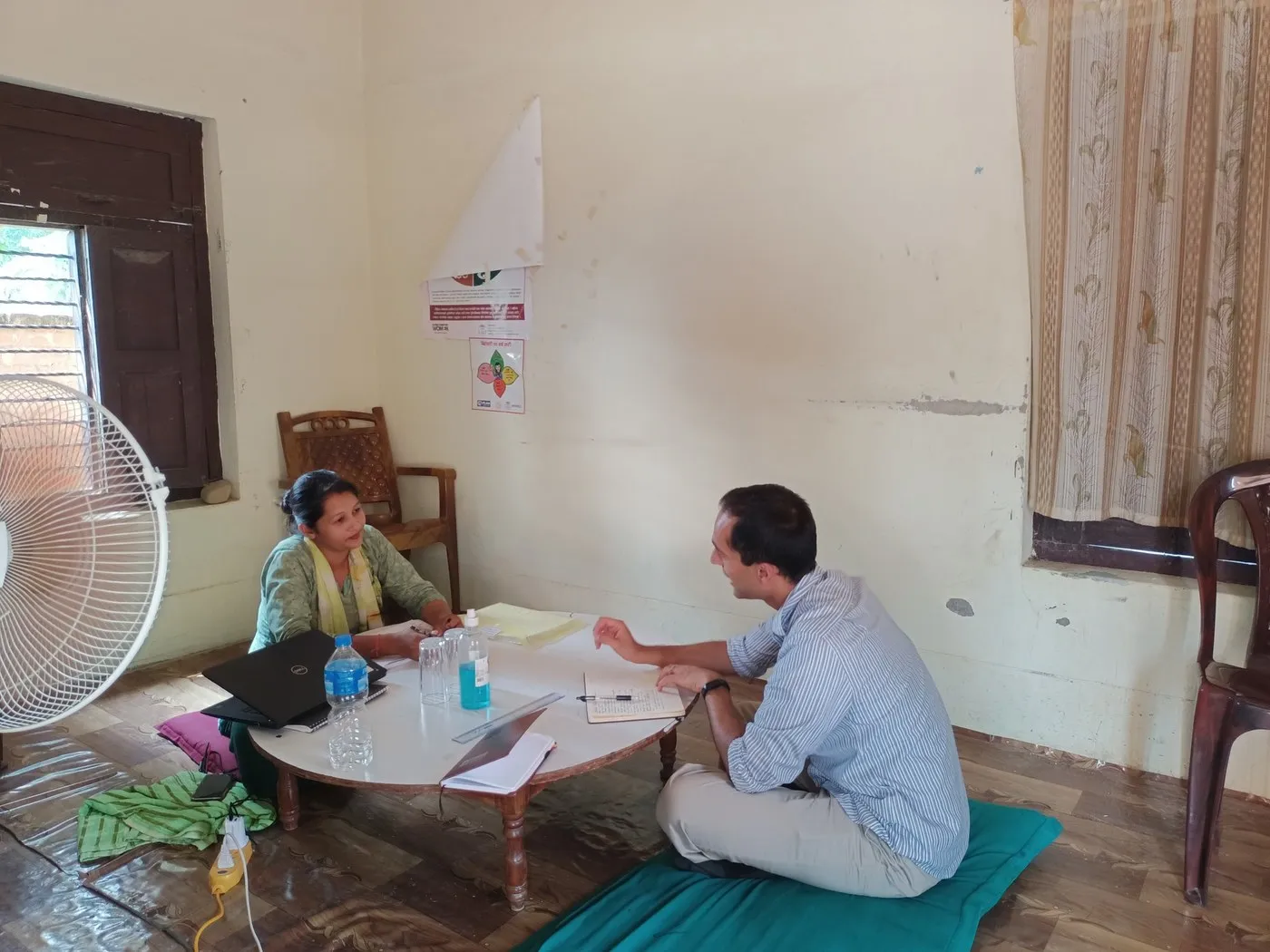
Bibhav Acharya sitting on the floor across a low table from counselor Arati, both taking notes.
Debriefing with counselor Arati after a MILAP session with the mother-in-law and the daughter-in-law

Reach out if you want to replicate or scale this up →

Scaled up

Collaborative Care: Mental Health Care Far from Psychiatrists

We told the primary care doc that the counselor is like a lab test.

ProblemA patient gets a referral to a psychiatrist or a psychologist who is too far or has an impossible waitlist. The primary care doc has some mental health training, but they’ll inevitably make mistakes. You could train me to identify potential skin cancer, but I’ll inevitably make mistakes, too. I’m a psychiatrist! I would need someone to catch and fix my errors.

SolutionPsychiatrists at the University of Washington also faced this problem and developed the Collaborative Care Model. We edited it for rural Nepal. We put a counselor in the primary care clinic to do long visits needed to figure out what’s wrong. The doctor then treats the counselor’s assessment like a lab test (“the counselor says depression is severe, so I need to prescribe meds”). A psychiatrist reviews patient cases each week, catching and fixing errors like I do with my students, being supportive rather than punitive. Community health workers visit patients, reminding them to take meds and come back for therapy. I wish we had more of them in the US.

StatusAmong 200 patients with depression in rural Nepal, our program improved outcomes at the same level as at the University of Washington. The program was embedded and expanded in government facilities run by Possible, helping over 10,000 patients (and counting). We were creating a training manual for the WHO to expand this program to Ghana and the Dominican Republic, but had to stop when the US pulled funding from the WHO.

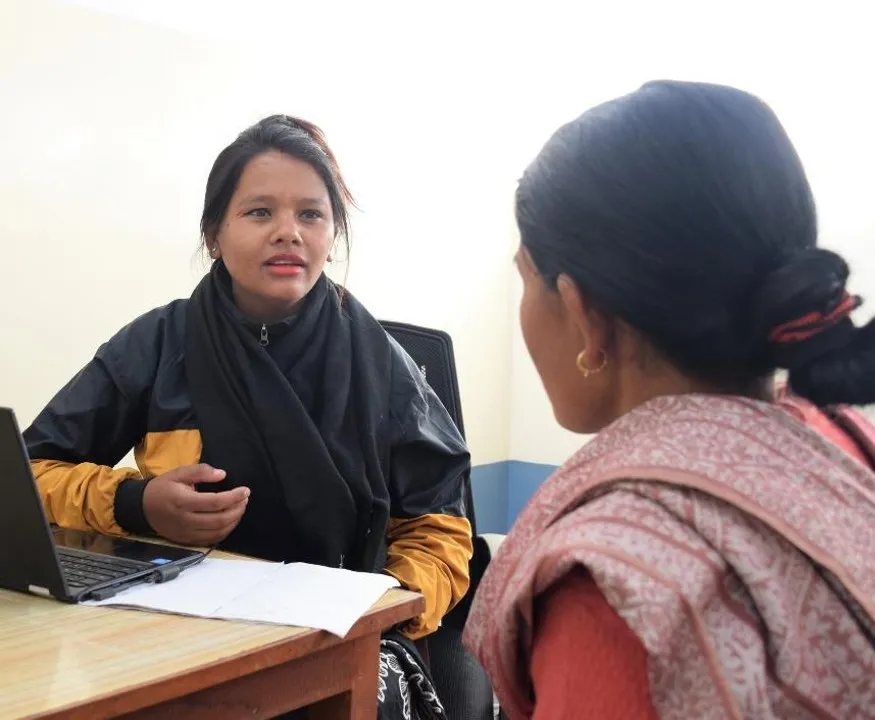
Counselor Janaki Rawal talking with a patient across a desk, a laptop and notes between them.
Counselor Janaki Rawal seeing a patient as part of the Collaborative Care Model in rural Nepal

Reach out if you want to replicate or scale this up →

Testing for scale

BECOME: Personalized Counseling at Home for Four Conditions at Once

Telling people to eat healthy doesn’t work. Neither does telling doctors that therapy is important.

ProblemThe same person often has depression, diabetes, anxiety, and high blood pressure. Although the correct first step is counseling, most people just get a prescription instead. Community health workers (CHWs) can help but telling people to stop eating junk food doesn’t work. We’ve all heard that advice. It’s junk. And doctors and payers don’t value therapy. It’s a big mess.

SolutionStep one: train CHWs in behavioral activation, stress management, and the most counterintuitive: motivational interviewing for things like improving diet and cutting down smoking. This counseling style doesn’t give advice or solutions. It starts by figuring out what’s most important for the patient (e.g., friendship, family) and having the patient connect the dots between healthy behaviors and what matters most to them. (Here’s my free lecture for the curious.)

Step two: doctors need to tell patients that proper counseling is important. So we have the CHWs train the doctors to manage their own stress. Doctors learn, often without realizing, that good counseling isn’t just fluff but can actually help.

Step three: now to the payers. We have the CHWs present their patient stories alongside doctors to government leaders. Instead of seeing CHWs as clerks, the leaders see them as clinicians worth paying and supporting.

StatusWe are testing BECOME with 700 patients within the public system by training and supporting the Nepal government’s community health workers.

Bibhav Acharya seated on a stool on a mud-walled porch with community health workers and a family, several goats resting on the ground nearby.
Listening to Community Health Workers in Nepal's flatlands, where the temperatures are high and the goats are chill

Reach out if you want to replicate or scale this up →

Testing for scale

Harmony: Reducing Alcohol Use and Domestic Violence in Primary Care

While each one seems impossible, we’re training nurses to treat both.

ProblemA woman in urban India says her husband hits her when he drinks. The husband is a day laborer and can’t skip work or really afford to go to rehab, which is often the only available treatment. A local organization offers to help the woman safely leave him but she feels stuck, partly because of social and financial pressure to stay together but also because she thinks alcohol is the main problem. There is no place to get treatment for both.

SolutionA group in Bangalore had tested a financial incentive for the husband to be sober, followed by couples therapy to reduce violence. It worked, but the local government said they can’t pay people for sobriety. So we replaced the money with four sessions of motivational interviewing to reduce alcohol. And followed that with six sessions of couples therapy. All of this is delivered by nurses in primary care clinics.

StatusWe are testing the combined intervention with 400 couples in South India, embedding the program directly within the government’s primary care system that serves the urban poor.

Reach out if you want to replicate or scale this up →

Proof of concept

COMMIT: Making Sure “Counseling” Is Actually Counseling

Therapy is a skill, like soccer. Someone needs to watch you and give feedback.

ProblemClinicians counsel patients on healthy habits. But often this is finger-wagging (sometimes literally), telling patients they shouldn’t do this or that. There are proven counseling techniques that help the clinician see the world from the patient’s point of view instead of shaming them. You can teach these techniques but clinicians often go back to finger-wagging. It’s hard to change the clinician’s habits, too.

SolutionWe treat counseling like soccer or (gasp) surgery. An expert needs to watch the learner try, and give corrective feedback. That’s how I learned therapy. When we started, both my patients and I felt awkward being recorded. But we got used to it, and I received incredibly specific feedback: “You looked nervous there, what was going on? Let’s try that line again.”

I use the same technique to teach clinicians. We ask them to audio record the visit (with the patient’s consent), and they listen to the recording with an expert, who helps them improve their counseling skills, without finger-wagging.

They liked the techniques so much they tried it at home, with their teenagers and husbands.

StatusWe studied this to help young people with HIV and separately, patients with depression, to help them regularly take medications. As expected, both patients and health workers felt awkward at first but quickly benefited from the coaching that helped maintain the counseling skills. We’ve used this technique in other programs (like BECOME).

Reach out if you want to replicate or scale this up →

Proof of concept

INCLUDE: Reducing Stigma that Keeps People Away from HIV Clinics

Nobody working in the clinic thinks they cause stigma. We’re reducing stigma without alienating the clinical team.

ProblemA man with HIV sneaks into a clinic. The front desk staff asks him to sit away from others because the man is Dalit. Later, he tells the doctor he can’t sleep because of anxiety, and the doctor tells him to stop worrying too much. He’s had enough. He won’t go back to the clinic again. In Nepal, 50% of people who stopped HIV treatment said stigma was the reason. But if you survey HIV staff, most say they don’t have negative attitudes. What gives?

SolutionDuring intake, the HIV counselor asks the man to rate how much his HIV, mental health, sexual orientation, and his caste contributed to bad experiences in getting care. We start by assuming that there are problems, so the patient feels comfortable sharing them. If the patient says 8, we ask why not 6. That will tell us what’s driving problems. And we also ask why not 10; that tells us what is helping. We put all of this information in a dashboard, so the clinic has a clear picture of intersectional stigma affecting care. Clinics already track HIV outcomes but now they have a social snapshot too.

But that’s not enough. Once a month, the clinical team meets to review. We don’t call these stigma-reduction meetings (remember no clinician says they have stigmatizing attitudes), but inclusion conferences. The team looks at the drivers of stigma and the dashboard gives them a list of strategies to make the clinic more inclusive: lived experience expert visits, trainings, peer groups, etc.

StatusWe are testing INCLUDE in 4 HIV clinics. The data feeds into the government’s DHIS2. If this works, we will help governments scale this up to track and reduce stigma.

Reach out if you want to replicate or scale this up →

Still reading? Some unfunded ideas I’m working on: helping caregivers of people with dementia and parents of children with autism; combining therapy, technology, and medications to help people quit tobacco; improving care for people with psychosis, which continues to be heavily stigmatized. I am thinking about which tasks in these solutions can be safely delegated to AI, and am always excited to tackle new problems that seem impossible.